Bench Press Percentage Calculator
Convert a bench press 1RM into percentage-based training loads from 50% through 100%.
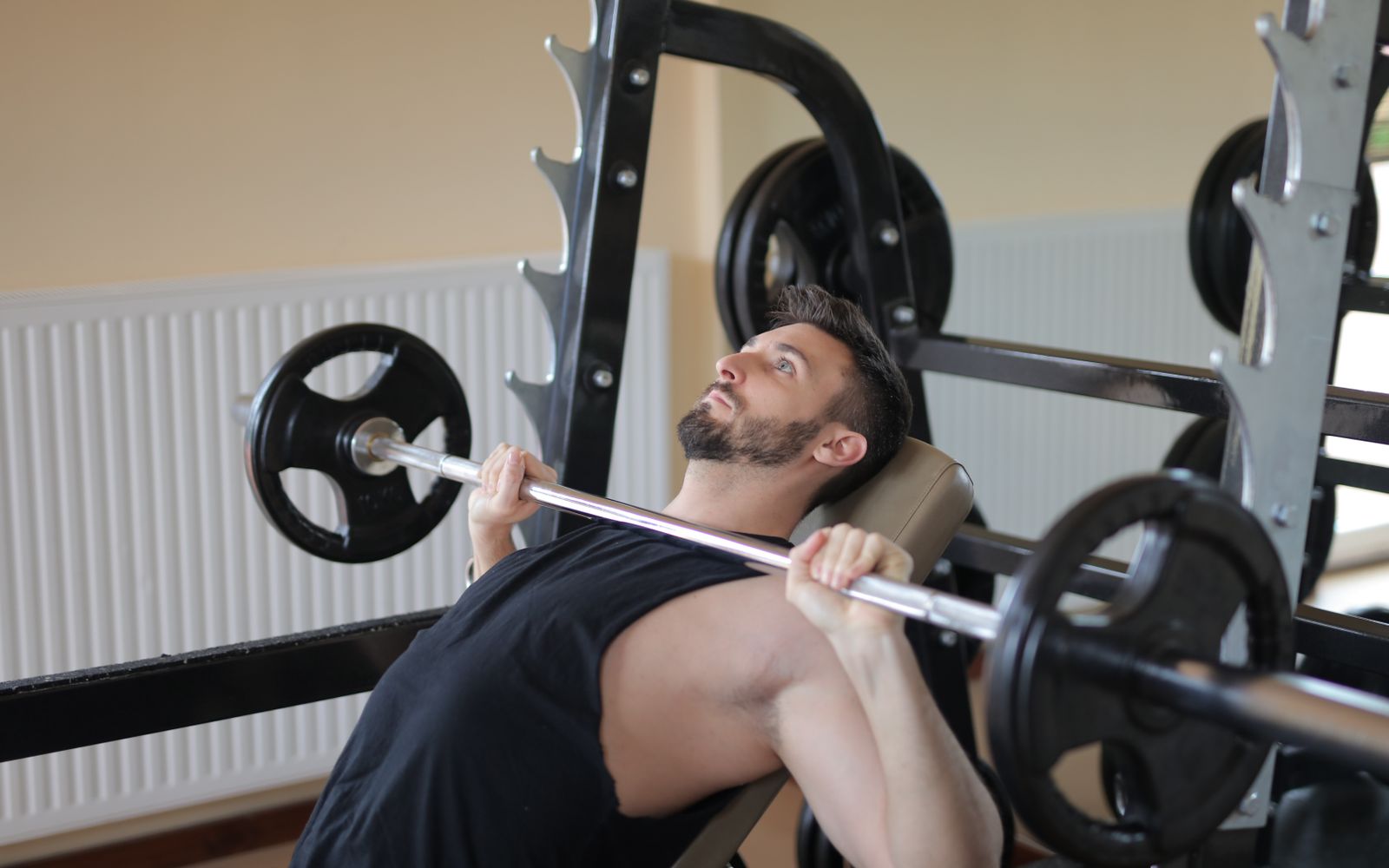
Exercise image: free Pexels photograph. See Sources for image credits.
Convert a known 1RM into a training load
The percentage calculator multiplies the 1RM you enter by the percentage you select. For example, 80% is represented as 0.80 in the calculation.
Formula: Training load = 1RM × percentage ÷ 100.
The tool does not decide what percentage you should train at. It simply converts the number you provide into the corresponding load.
Accuracy & limitations
- The result is mathematical, but the underlying 1RM may be estimated.
- Equipment availability and plate increments can make the practical load different.
- Do not treat a percentage table as individualized training advice.
What the result can and cannot tell you
A repetition-based 1RM is an estimate. Research shows that prediction equations can be useful, but their accuracy is not identical across exercises, populations and repetition ranges. For this reason, the tool accepts 1–12 reps, shows several equations, and avoids presenting a single formula as universally correct.
Use a completed set that represents your normal technique. A set performed with unusual range of motion, assistance, momentum, a machine-specific setup or substantial fatigue can change the relationship between repetitions and maximal strength.
Continue with another bench press calculation
Bench Press Percentage Calculator FAQs
How does the bench press percentage calculator work?
Enter the load you completed and the number of repetitions. The tool applies the documented calculation method and shows the resulting estimate.
Is the calculated 1RM exact?
No. It is a prediction from a submaximal set. A measured 1RM and a predicted 1RM are not the same thing.
Why are several formulas shown?
Different prediction equations can produce different estimates. Showing them makes the spread visible instead of hiding it behind one unexplained number.
What should I do if the result looks wrong?
Check the units, load, repetition count and exercise setup first. If the calculation still appears incorrect, use the Corrections page to report it.